


Giffard takes a long-term view
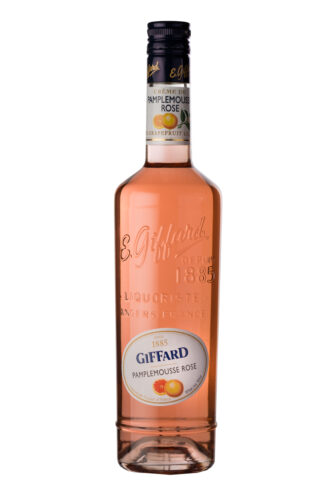 French liqueur company Giffard balances craftsmanship, tradition and family values with sustainable large-scale production methods. Kate Wake-Walker finds out how
A go-to brand for mixologists around the world, Giffard was founded in 1885 when pharmacist Emile Giffard created the peppermint liqueur Menthe-Pastille that would become its flagship product.
Five generations later and Emile’s descendants are still at the company’s helm and Menthe-Pastille is still its leading line. (Even early 20th-century posters advertising the liqueur have become famous — they feature work by artists such as the ‘father of advertising’ Leonetto Cappiello and Eugène Ogé.) Today, Giffard produces 60 liqueurs at its distillery in Avrillé in France’s Loire Valley, as well as 90 syrups at its state-of-the-art factory in nearby Saint-Léger-des-Bois. All just a hop, skip and jump away from the centre of Angers where Emile converted his pharmacy into Giffard’s first distillery.
Family ownership is a cornerstone of Giffard’s success. The company is owned and operated by Emile’s greatgrandchildren, brother and sister co-CEOs Bruno and Edith Giffard, who took over the company from their father. They will, in turn, pass the baton to Edith’s son, Pierre Jouanneau-Giffard (chief operating officer), and Bruno’s daughter, Emilie Giffard (sales and brand development manager UK and North Europe). Together, they strive to balance the company’s artisanal mindset with sustainable practices and the demands of modern large-scale production.
Giffard creates most of its liqueurs by macerating fruit, herbs or spices in distilled alcohol. It is a “carefully observed process requiring a lot of tasting”, explains Bruno, that can take from 24 hours to three months to achieve the “perfect flavour balance”.
The decline of after-dinner drinking has put many range liqueurs under pressure in recent years. But Giffard, with its rich history and dedication to craft methods, has been was well placed to tap into changing consumer trends, such as the growing demand for premium products.
With this in mind, it developed the “purest and most versatile flavours” for its Premium range. The objective, says Bruno, was to “find the finest expression of fruit and then produce a no-compromise liqueur, such as Liqueur de Banane du Brésil or Abricot de Roussillon, which sit above the Crème Banane and Giffard Apricot in the Classic range”.
With most of its sales in the ontrade, Giffard has also been able to plug into the no/low trend and rising demand for good-tasting, alcohol-free cocktails. Giffard international marketing director Romain Burgevin says: “We distribute to more than 60 countries, with the biggest focus on catering to bartender requirements. Although liqueurs are in the Giffard DNA, we began [increasing] syrups production in 1992. They boomed around 2002, with the first overseas sales for syrups in the German on-premise, and sales are increasing each year.”
 ‘Being close to our market is key’ Giffard’s syrups range was created for professional bartenders and this has really paid off. “It’s a big advantage to be able to supply syrups and liqueurs with the same level of quality. It’s a good solution for bartenders as they become more experimental in terms of ingredients,” Burgevin explains. He estimates that the current skew in Giffard’s sales is 50% liqueurs (4m bottles) and 50% syrups (4m bottles).
“We deliberately keep the same balance — the syrups market is booming, but our primary strength is to have this capability to address all bartender requirements,” adds Burgevin. “In Germany, we installed a dedicated [brand management] team, which was a success. Now we have several teams abroad because we know that it is key to be as close as possible to our market and users.” Working with the best ingredients has been part of Giffard’s ethos since Emile selected the perfect English peppermint — Mitcham — for Menthe-Pastille. But keeping things sustainable and local is important too, so 10 years ago Giffard partnered with a local farmer to grow the peppermint for its flagship product close to the Avrillé distillery.
In fact, Giffard sources as many ingredients as possible within a short radius. The blackcurrants for its Crème de Cassis are harvested within 50km of the distillery — according to Bruno, it is the “best region in the world for cassis” — while its syrups are made using sugar refined from sugar beet grown in northern France. “Ensuring sugar beet is sourced locally, reduces food miles and the carbon footprint, while supporting the local economy,” says Bruno.
Other sustainability initiatives include reducing Giffard’s bottles size to save 100g of glass per bottle, and dramatic reductions in power, water and waste, with 89% of Giffard’s waste now recycled and 21% less water used per litre of product it produces.
That sustainability is a priority is perhaps most evident at Giffard’s syrups factory. The 7,000sqm plant opened in 2017, allowing the company to separate and increase both its liqueurs and syrups production. Built with sustainability in mind, it utilises natural light, solar panels and collected rainwater and has space for further expansion.
When Emile became a liquorist, he noted in his diary: “The future will tell if I was right.” So it’s no surprise to learn that Giffard continues to take a long-term view.
No Comments